VR De-escalation Training Simulator
Preparing care professionals for challenging situations through immersive training
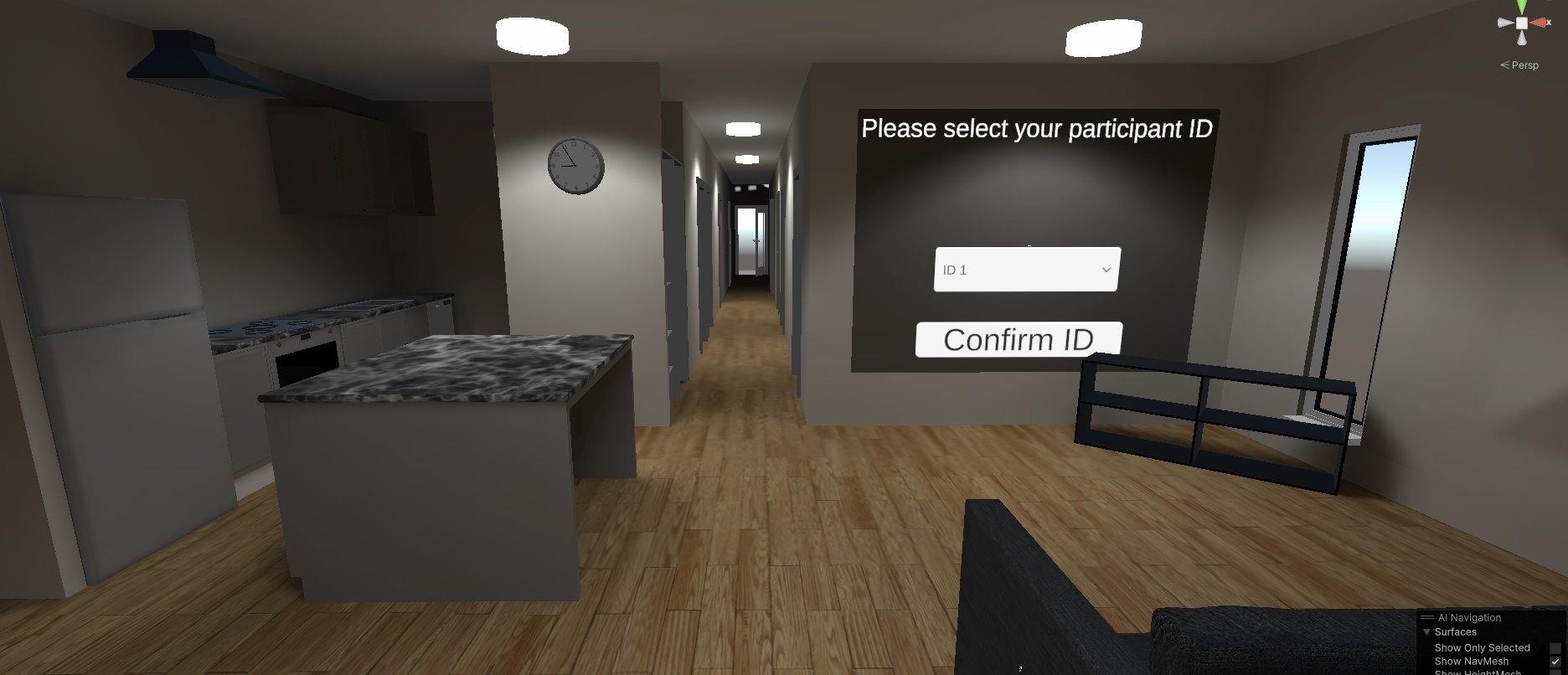
This project investigates the application of virtual reality in training and learning within the care sector. The simulator provides care professionals with realistic scenarios to practice de-escalation techniques in a safe, controlled environment.
By immersing trainees in challenging situations they may encounter in disability support settings, the VR training tool allows them to develop and refine their response strategies without risk to themselves or the people they support.
Gallery
Key Features
- Realistic Scenarios — Virtual environments modelled on real-world care settings
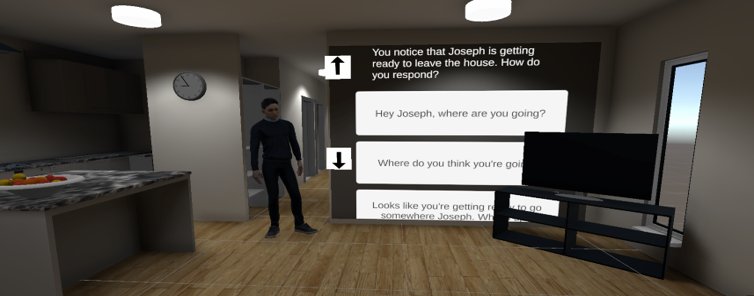
- Branching Dialogue — Multiple response options with different outcomes
- Safe Practice Space — Learn from mistakes without real-world consequences
- Participant Tracking — Individual progress and response logging for research
How It Works
The simulator places trainees in a realistic home environment where they interact with virtual characters exhibiting behaviours of concern. Trainees must choose appropriate verbal responses and observe how the situation evolves based on their choices.
The branching dialogue system allows for multiple pathways through each scenario, demonstrating how different approaches can lead to successful de-escalation or escalation of the situation.
Related Publication
This work is documented in Bridging the Gap: Virtual Reality as a Tool for De-escalation Training in Disability Support Settings (Multimodal Technologies and Interaction, 2024).