Co-designing A Customisable VR Sensory Room with Autistic Adults
Iterative prototyping and participatory research developing personalised virtual sensory environments
This project explores the co-design of customisable virtual reality sensory rooms with autistic adults. Working directly with participants through iterative design cycles, I developed a VR environment that allows users to personalise sensory elements to create calming, comfortable spaces tailored to their individual preferences.
The research investigates how VR can provide autistic individuals with a portable, accessible solution for sensory regulation, while the co-design approach ensures the technology genuinely meets user needs.
Initial Design
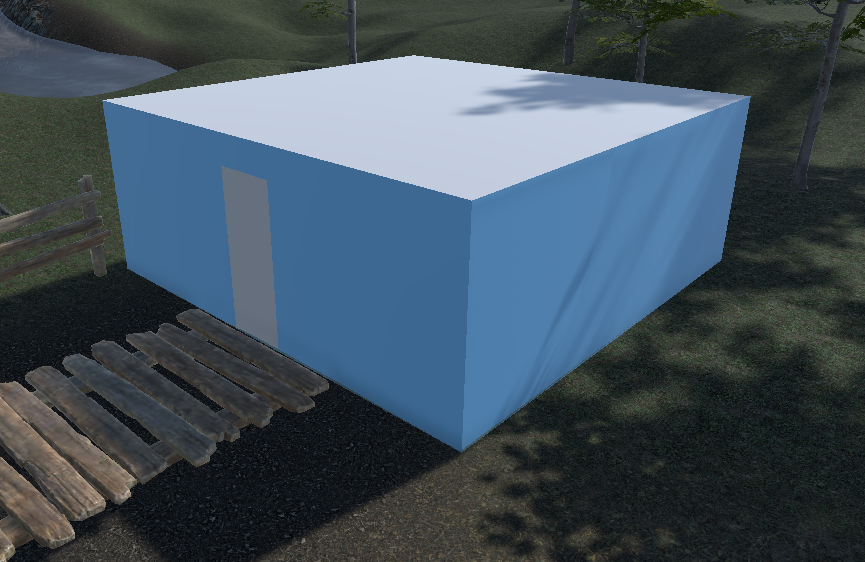
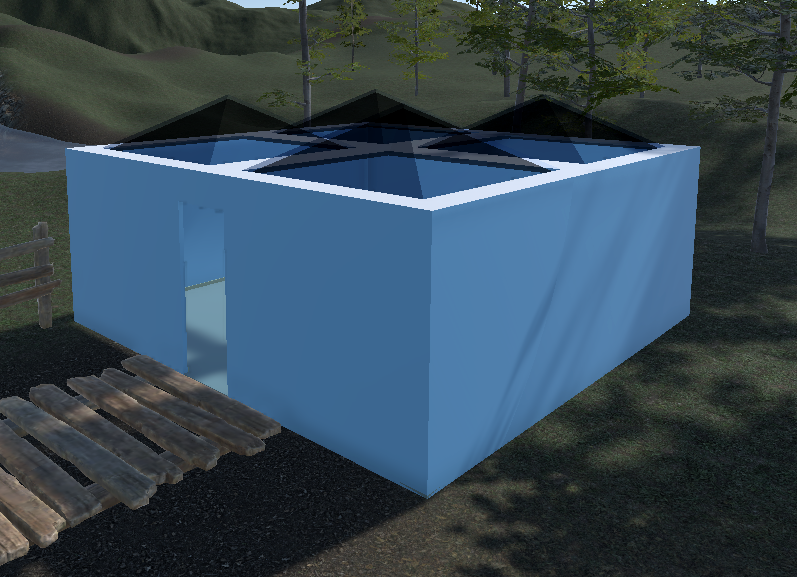
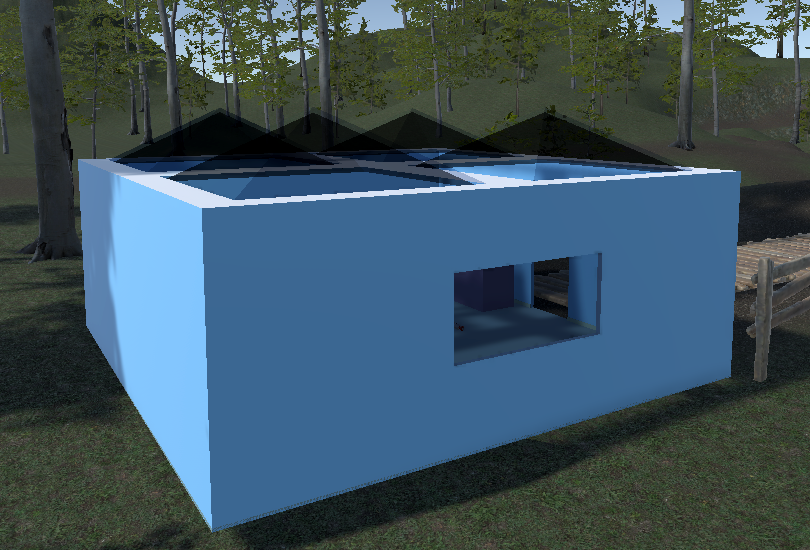
The project began by prototyping different styles of "rooms" and creating a basic wireframe for the UI. I opted to start with a very basic room as it made implementing customisation less challenging and would provide participants with more of a blank slate to build upon.
Room Prototypes
Version 1 - Features
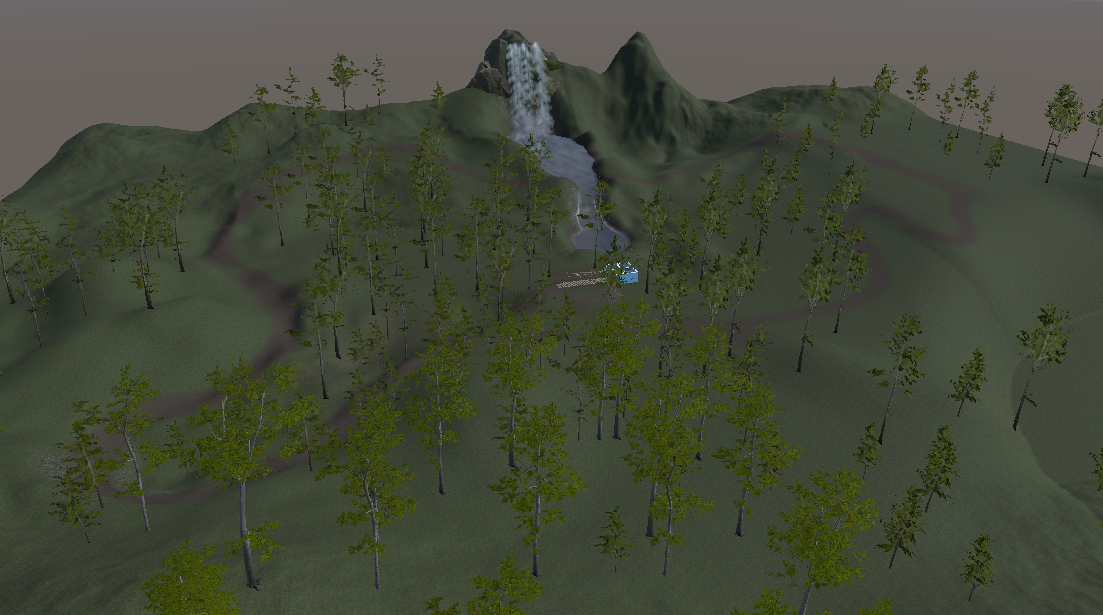
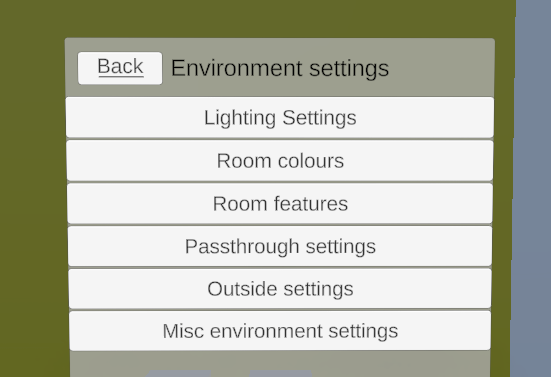
The first version included a "forest" environment with waterfall, a basic UI that allowed spawning of items and customising the room. Key features included:
- Forest Environment — Natural landscape with waterfall and trees
- Basic UI — Menu system for spawning items and customising the room
- Pass-through — Ability to see the physical environment without removing the headset
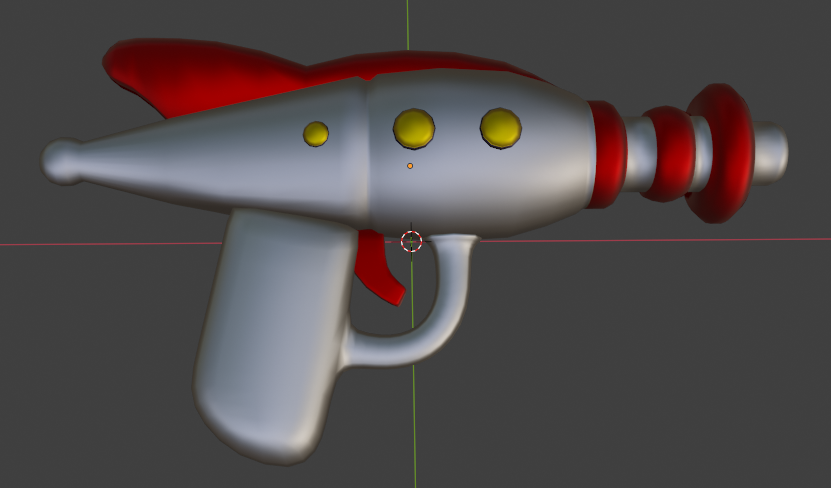
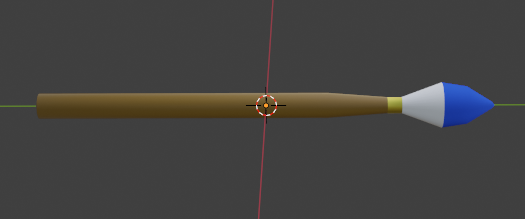
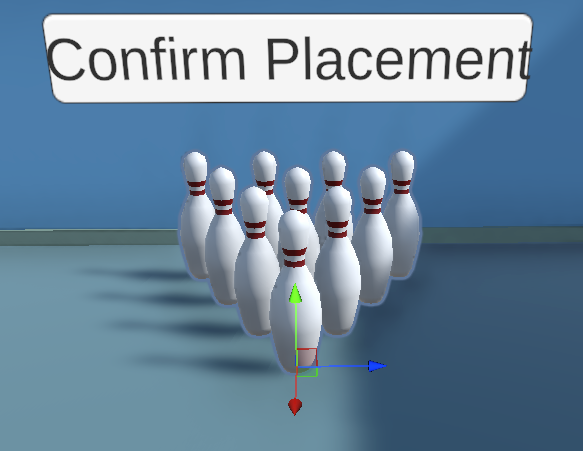
- Interactive Objects — Ball gun, paintbrush, and bowling pins
Version 1 Environment & UI
Interactive Objects
These items were chosen as they afforded the ability to prototype object interactions across a range of different interaction types — items that could be held, items that could be placed, and items that afforded customisation.
3D Models
Version 2 - Improvements
Based on participant feedback, Version 2 included significant improvements:
- Improved Menu — Ability to open the menu anywhere by pressing "A", always opens in front of the user
- Expanded Object Library — More items available to spawn and interact with
- Easier Controls — Sliders and drop-downs made easier to use
- Redesigned Paintbrush — Now comes with a palette, change colour by dipping it in paint
- Enhanced Ball Gun — Can fire different colours, bouncy balls, and swap between semi and fully automatic
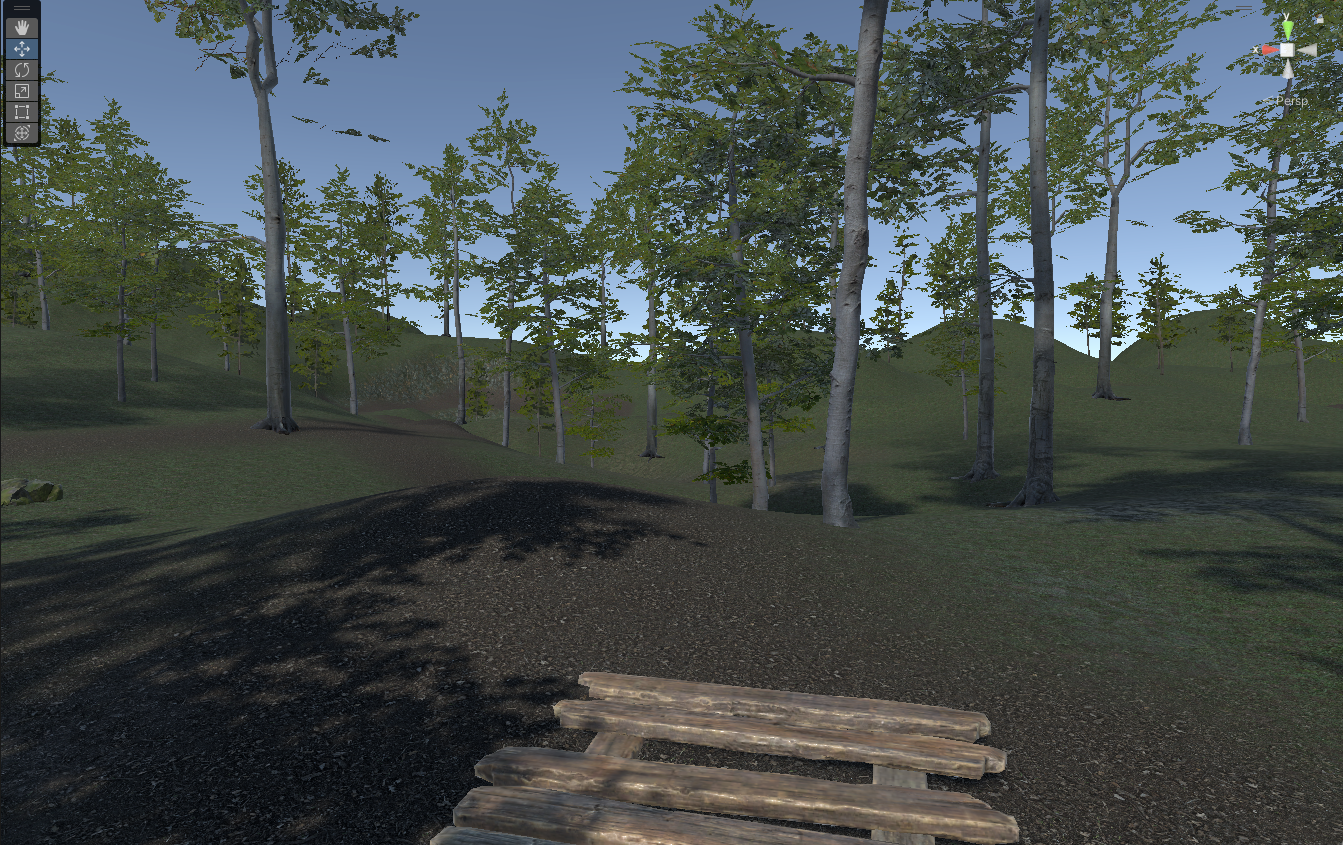
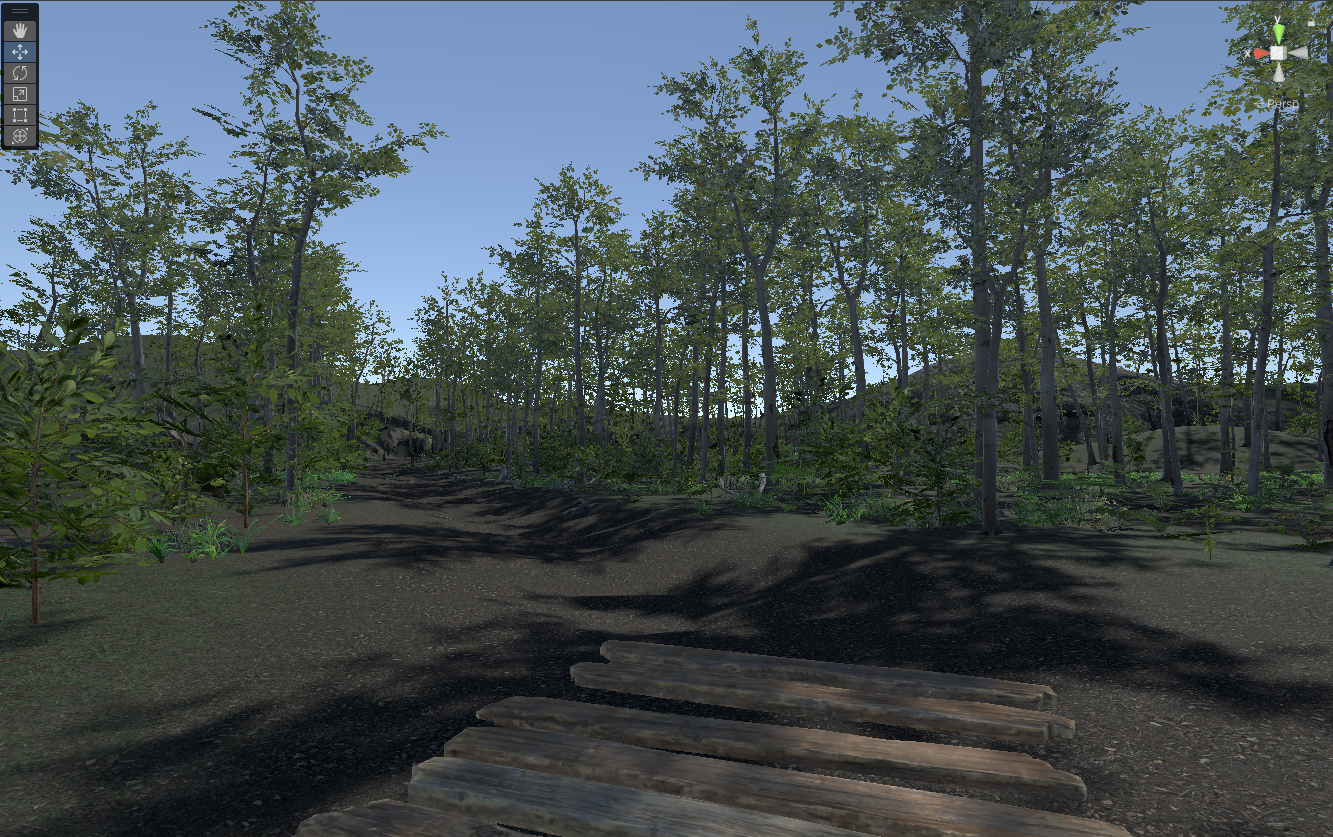
Version 2 Environment
Version 3 - Expanded World
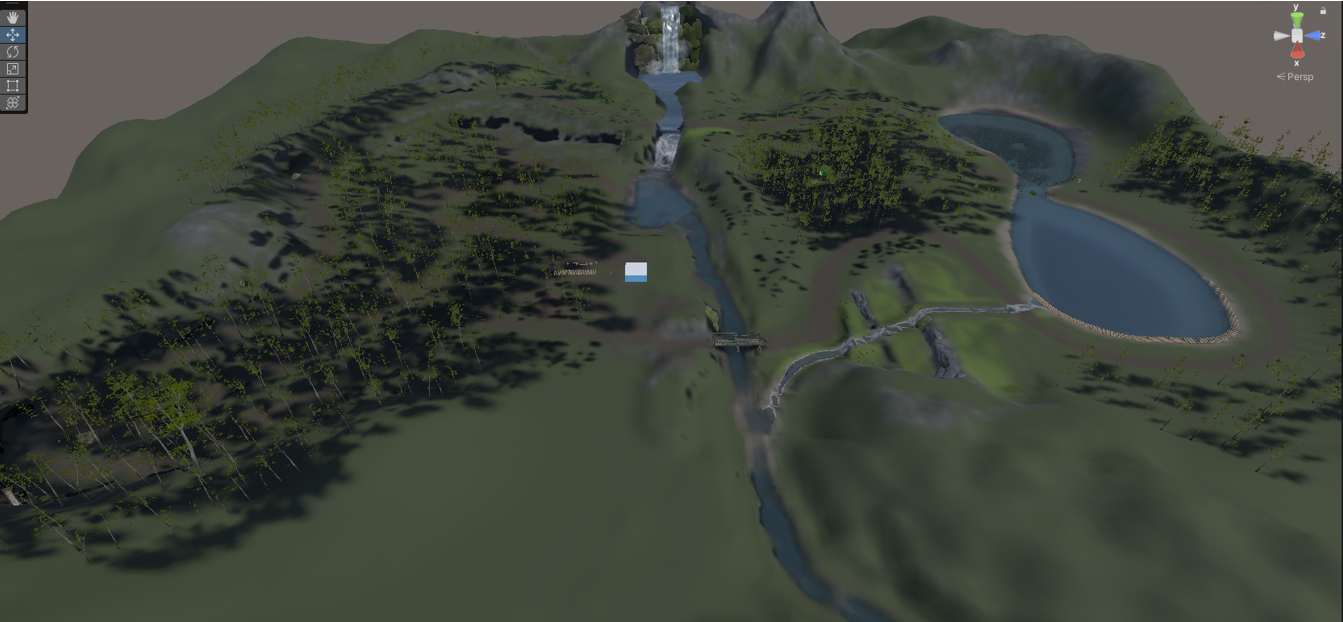
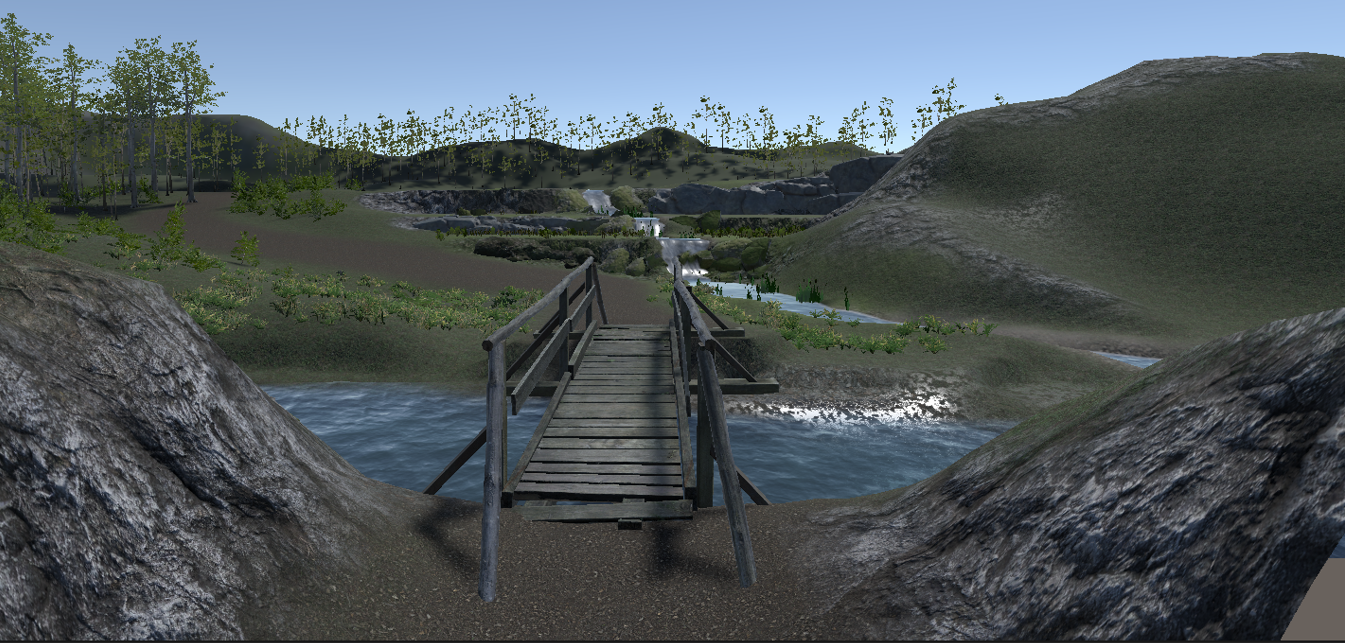
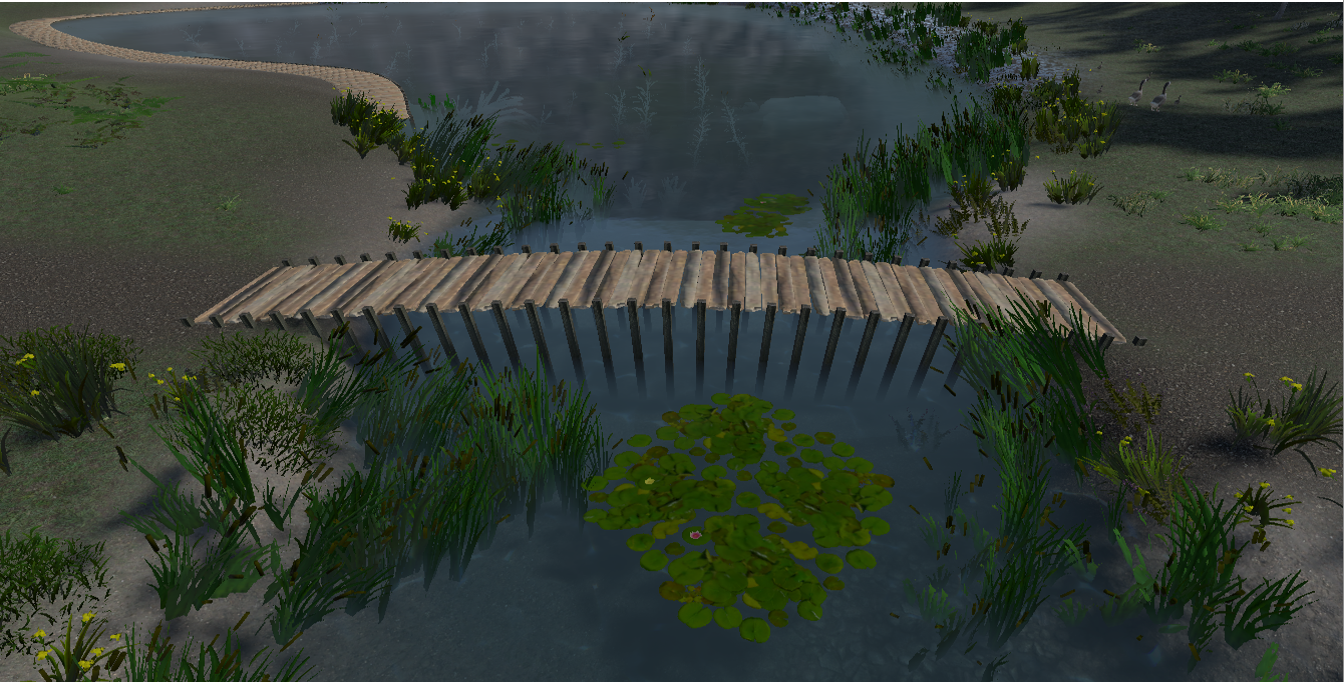
The third iteration dramatically expanded the environment based on co-design feedback. The area became too large to capture in a single image, featuring:
- Expanded Landscape — Much larger explorable area with varied terrain
- Water Features — River system with bridge crossings, pond with lily pads, detailed waterfall
- Underwater Environment — Explorable underwater area with aquatic plants and fish
- Wildlife — Geese and deer added for ambient life
- Cosy Spots — Points of interest including a customisable hut with lava lamp and seating
- Rock Formations — Decorative rock arches and natural features
Version 3 Environment
Technical Details
Built in Unity using C#, the prototype was developed for PCVR platforms to leverage high-fidelity graphics during the co-design research phase. The environment features procedurally generated natural landscapes, dynamic lighting systems, and an intuitive menu system for real-time customisation.
A key technical challenge was creating a system that would only access object behaviours when necessary. For example, the ball gun shouldn't fire anytime the trigger is pressed — only when it's being held correctly.
Related Publication
This project informed the research published in Insights into Sensory and Relaxation Preferences to Inform the Design of Calming Spaces and Sensory Rooms for Autistic Adults (Autism in Adulthood, 2025).